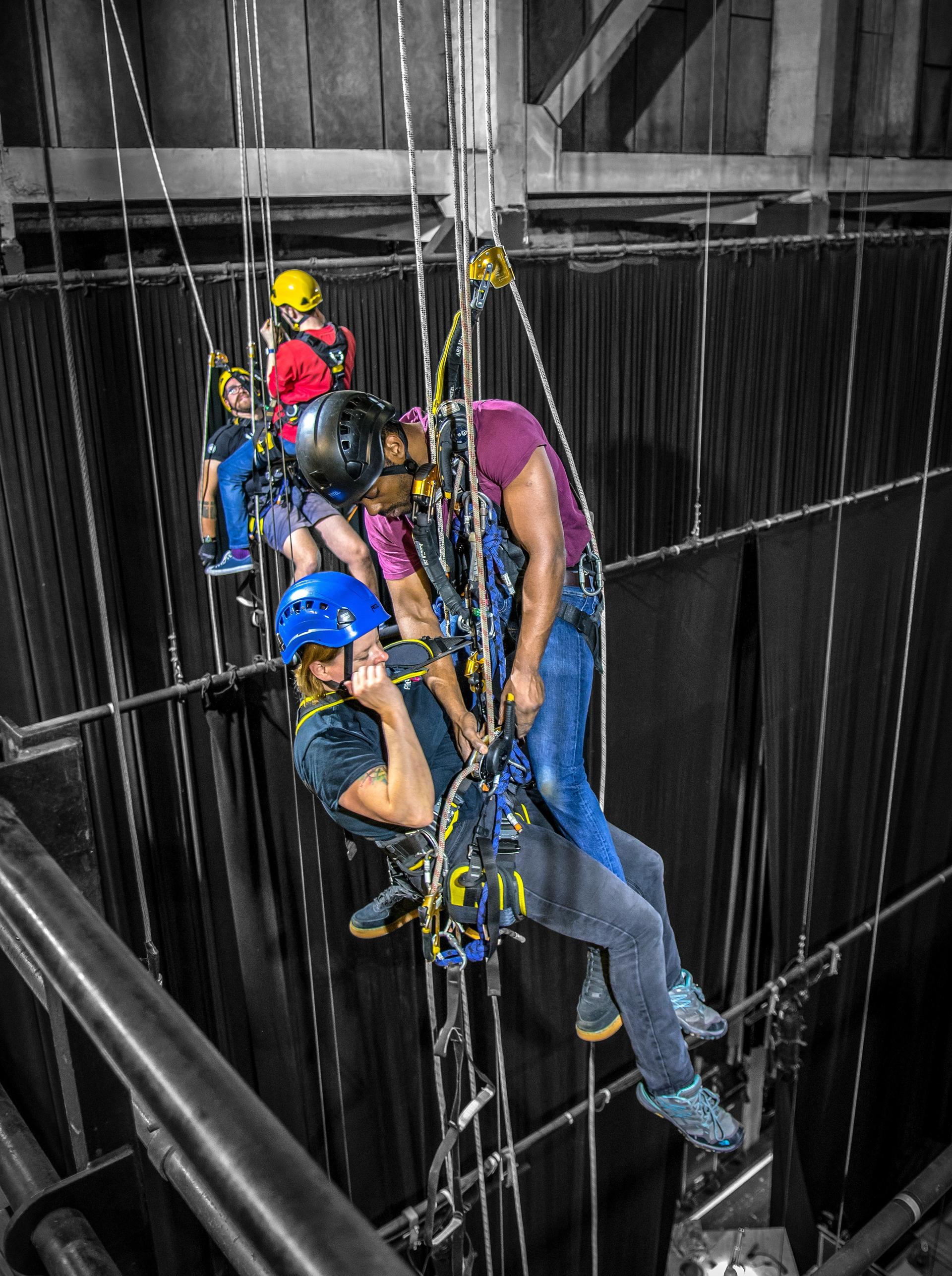
Rope Access for Theatre Technicians Level 2
Personal suspension in a theatre environment requires precision, sound judgement and a thorough understanding of the equipment and techniques involved. This course gives theatre technicians the knowledge and hands-on experience to use personal suspension techniques safely, covering equipment inspection, anchor point selection and more. On successful completion, delegates receive a certificate of competency valid for three years.
• Working at height legislation
A review of the Work at Height Regulations 2005 and the duties they place on employers and employees when planning and carrying out personal suspension work in theatre environments.
• Personal suspension equipment
How to inspect and correctly use personal suspension equipment before and during work, including harnesses, connectors and associated components, in line with manufacturer requirements.
• Risk assessment
How to identify and assess the hazards specific to personal suspension work in theatre environments and apply appropriate control measures before beginning any work at height.
• Anchor point selection
How to identify and assess suitable anchor points for personal suspension within a theatre structure, including load requirements and connection methods for different rigging configurations.
• Knots and rope rigging for rescue
The knots and rope rigging techniques required for personal suspension and rescue work in theatre environments, including when and how each is used correctly.
• Basic manoeuvres
How to carry out safe ascent and descent using personal suspension equipment, including correct body position, equipment management and the precautions required when moving through a theatre rigging structure.
• Deviations and rope-to-rope transfers
How to use deviations to redirect a rope around obstacles, and how to carry out a rope-to-rope transfer safely when moving between anchor systems within the structure.
• Rescue procedures
How to carry out a snatch rescue and a rescue from anchor points, including the techniques required to reach, package and lower a casualty safely from a personal suspension system in a theatre environment.
• Assessment
Practical assessment on the final day, evaluating competency across all personal suspension techniques covered during the course.
Course combining classroom theory with progressive practical sessions. Delegates build from basic manoeuvres on day one through deviations and transfers on day two, before completing a practical assessment on day three.
Theatre technicians required to access and work safely at height using personal suspension techniques, and personnel responsible for rigging and theatre maintenance at height.
Delegates should have a basic understanding of working at height and PPE usage.