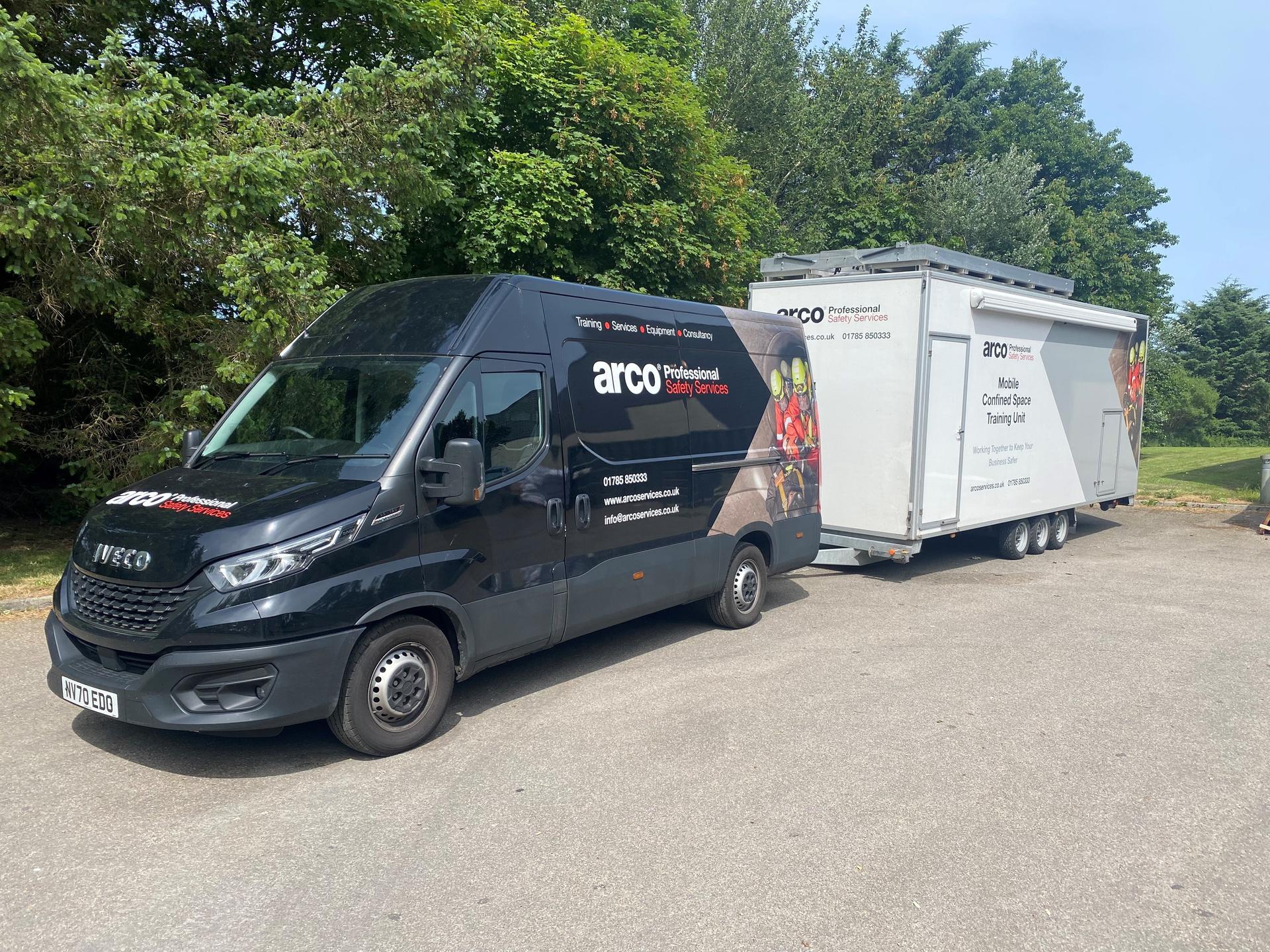
Confined Space High Risk Reassessment with Mobile Training Unit
Renew your high-risk confined space qualification by demonstrating continued competency across the practical skills and underpinning knowledge required to work safely in high-risk environments. This reassessment covers hazard identification, advanced risk assessment, gas monitoring, safe systems of work, fall protection equipment and the use of both emergency escape breathing apparatus and self-contained breathing apparatus, confirming that skills and knowledge remain current and compliant with the Confined Spaces Regulations 1997. Successful completion renews your City and Guilds high-risk confined space qualification for a further three years.
• Definition and classification
A review of how confined spaces are defined under the Regulations and the conditions that determine high-risk classification, with particular attention to any changes in the working environment since initial qualification.
• Specified risks and hazard identification
Reassessment of the five specified risks and the hazards associated with high-risk confined spaces, including how atmospheric and physical conditions can deteriorate rapidly during entry.
• Duties under the Regulations
A review of employer and employee duties under the Confined Spaces Regulations 1997, including the primary obligation to avoid entry where reasonably practicable and the steps required when entry cannot be avoided.
• Advanced risk assessment
Practical application of advanced risk assessment techniques in high-risk confined space environments, including identifying significant hazards, selecting appropriate control measures and documenting findings before work begins.
• Gas monitoring
Reassessment of correct gas detector operation in high-risk environments, including pre-use checks, atmospheric interpretation and the actions required when readings fall outside acceptable limits.
• Safe systems of work and permits to work
A review of safe system implementation and permit to work requirements for high-risk operations, including how permits are issued, managed and cancelled, and how point-of-work assessments are used to respond to changing conditions.
• Roles, responsibilities and communication
A review of the duties of entrants, the top man and the entry controller in high-risk operations, and how reliable communication is maintained under high-risk working conditions including escalation procedures when communication is lost.
• Fall protection and entry equipment
Familiarisation and inspection of tripods, winches and fall arrest equipment used for entry into and exit from high-risk confined spaces.
• Breathing apparatus
Reassessment of the inspection and use of both emergency escape breathing apparatus and self-contained breathing apparatus (SCBA), including donning procedures, function checks and safe use under working conditions.
• Assessment
Observed practical exercises and a short-answer question paper, evaluated by the course instructor. This reassessment confirms continued competency rather than certifying completion of the full training programme.
Reassessment combining classroom-based theory review with practical exercises, hands-on equipment use and scenario simulations, assessed by the course instructor. This course is not a substitute for the full high-risk confined space training programme.
Operatives, engineers, maintenance staff and contractors who have previously completed high-risk confined space training and require reassessment to maintain competence and renew their qualification.
Delegates must hold a valid high-risk confined space certificate. Delegates must be physically capable of working in high-risk confined spaces. Delegates should have a basic understanding of PPE, fall protection and safe systems of work.