

Company News
 Arco chairman Thomas Martin has been honoured with a prestigious Lifetime Achievement Award, recognising his “exceptional contribution to the safety and health industry over almost four decades”.
He was bestowed with the award at last night’s Safety and Health Excellence Awards, part of the three-day Health & Safety Event, where Arco, the UK’s leading safety company, has made its return for 2024.
Also on the night, Arco, which is celebrating its 140th anniversary, was commended in the Distributor of the Year award, with judges recognising the company’s commitment to customer satisfaction and its joined-up approach to safety products and services.
Thomas said he was honoured to accept the Lifetime Achievement Award.
Thomas Martin, chairman of Arco, said:
“I’ve always surrounded myself with experts, and this has enabled me to make an impact on our industry. Market leaders earn the right to comment, and career learnings ensure this is done responsibly. The award celebrates the first 36 years, and there’s plenty more to do; I’d better get on with it.”
As the fourth-generation leader of the family business, Thomas started his journey in a London advertising agency before joining Arco in 1988. With a clear passion for the business, Thomas assumed pivotal roles within Arco, including Trading Director (Safety) in 1993, Supply Chain Director in 1998, and Joint Managing Director in 2002, before taking the helm as Chairman in April 2017.
Presenting the Lifetime Achievement Award, host Dara Ó Briain said during Thomas’s time as Joint Managing Director and now Chairman, he had helped shape Arco into one of the “premier businesses in health and safety, by both scale and impact”.
Testament to this, Arco has led the industry on responses to global emergencies and best practice, pushing for regulatory changes and championing expertise and corporate responsibility.
In 2007, Arco joined the Ethical Trading Initiative (ETI) an alliance of companies, trade unions and non-profit organisations that aims to promote respect for the rights of workers worldwide. Arco is the first and only safety distributor to join the ETI.
During the Ebola outbreak in 2015, Arco was the leading PPE partner in the UK’s humanitarian response, supporting government agencies with advice on the correct products needed to keep volunteers safe but also in procuring and supplying the products to the front line.
Most recently, during the Covid-19 pandemic, Arco stepped up to secure additional PPE for frontline workers, while advising government bodies on PPE regulations and standard.
Following the crisis, Thomas gave evidence to the Public Accounts Committee on how the Government response could be improved for the future.
Company News
Arco Professional Safety Services has launched its new website, making it easier for customers to access essential safety services, information and equipment.
As well as a more modern look and feel, the site offers better user navigation and a smoother experience on mobile devices.
Key improvements of the new website include:
Expert advice 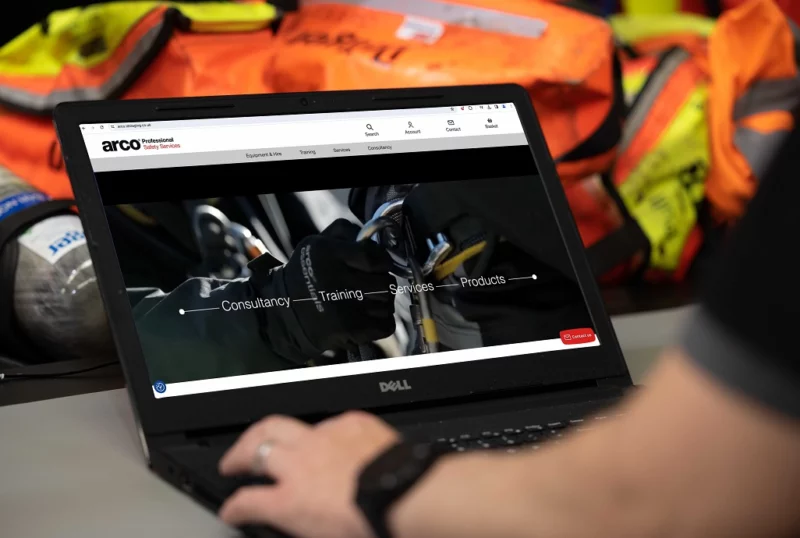
Easier access to consultancy advice, training, support services and equipment across Arco Professional Safety Services’ areas of expertise, including working at height, confined spaces and respiratory protection.
Training
Improved search and enhanced filtering options to help customers find the right courses, as well as a more efficient booking system.
Equipment shop
A better shopping experience with improved product search and filtering, making it easier to find and purchase safety equipment.
Equipment hire
More information on the equipment available to hire and the option to hire directly from the website, a feature that was not available on the previous site.
Jamie Sadler, Commercial Director at Arco Professional Safety Services, said: “This new website provides a seamless and intuitive platform for our customers to access our essential safety services and resources with ease.
“The team has been hard at work on the site behind the scenes, and we’re thrilled that customers can now enjoy the many improvements it offers.”
Existing customers will be asked to reset their passwords when signing in to the new site for the first time. All other existing sign-in details will remain the same.
Arco Professional Safety Services provide consultancy, training, services and equipment to manage complex and high-risk, high hazard scenarios.
Explore the new website: Arco Professional Safety Services
Company News
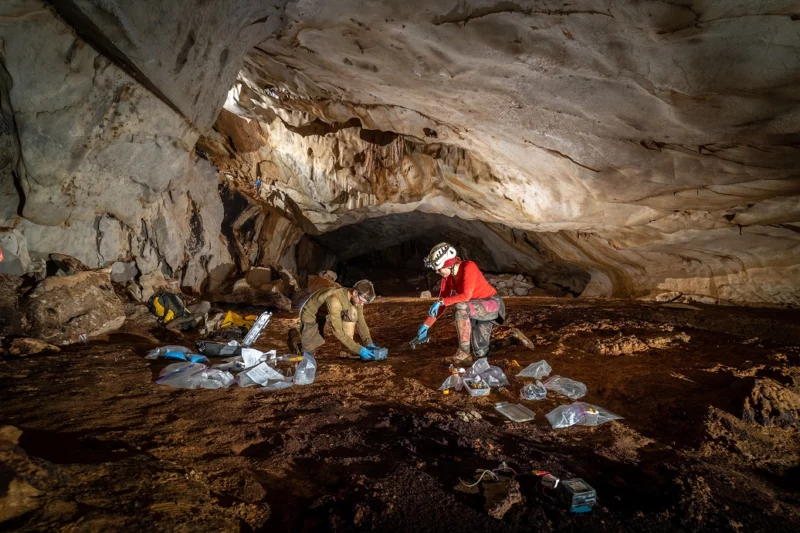
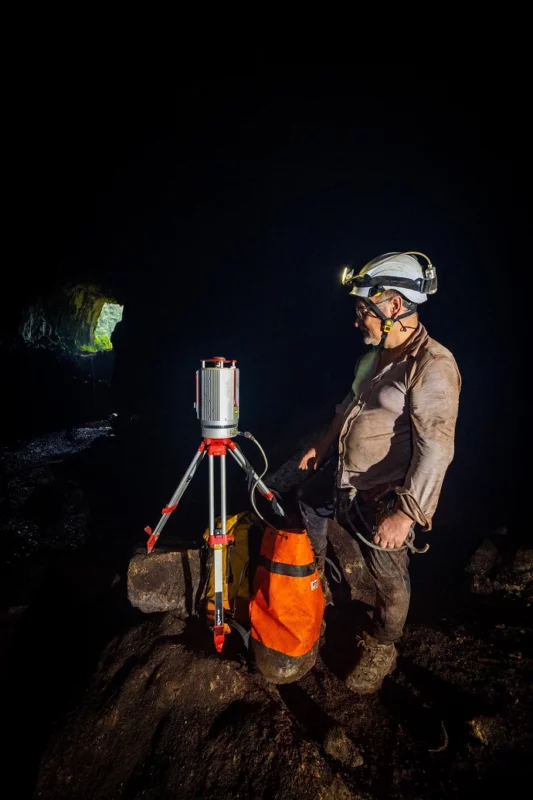
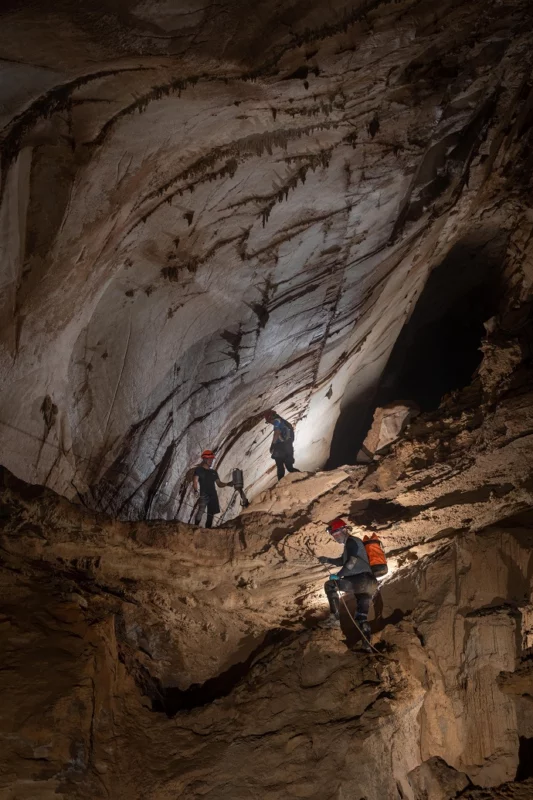
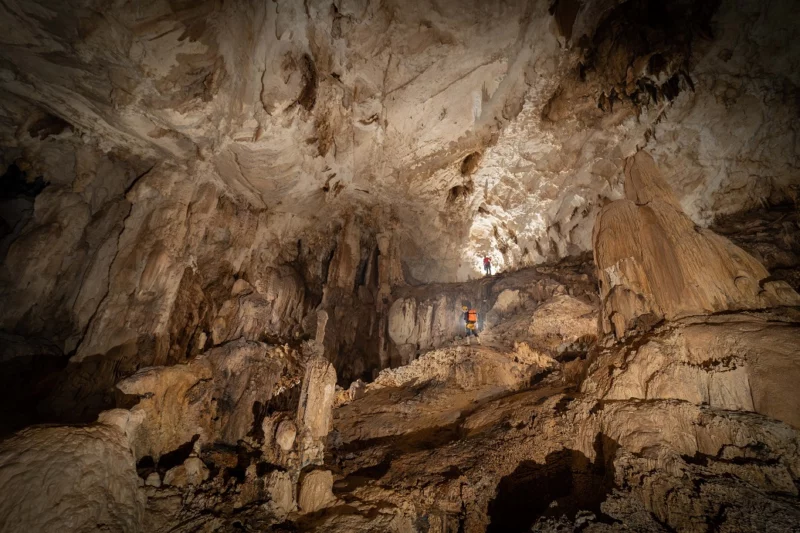
Arco Professional Safety Services Training Instructor, Bartek Biela, embarked on a pioneering expedition to Gunung Mulu National Park to support cave work efforts which could potentially lead to future confirmation of its status as the largest cave system in the world by volume.
3D laser scanning was used to measure the volume of sections of the Clearwater Cave system and unveiled a vast connection, almost a kilometre long, leading to a chamber previously believed to be a dead end in earlier expeditions, adding a new layer of mystery to the intricate Mulu cave system. Today, larger passages are harder to find but the systematic approach employed to surveying of the smaller openings allowed the cavers to add hundreds of meters of new data to the master survey.
The three-week expedition, which comprised of 22 dedicated cavers and scientists to survey the caves, undertake scientific research and exploration, has also led to significant findings on the condensation corrosive effects to fabrics and plastics.
Agents that are present in the Mulu caves environment have been found to cause significant degradation of glued seams, stitching and other man-made polymers. These acidic gases are being tested by UK and American cave scientists to establish the causes of significant degradation of glued seams, stitching and other man-made polymers.
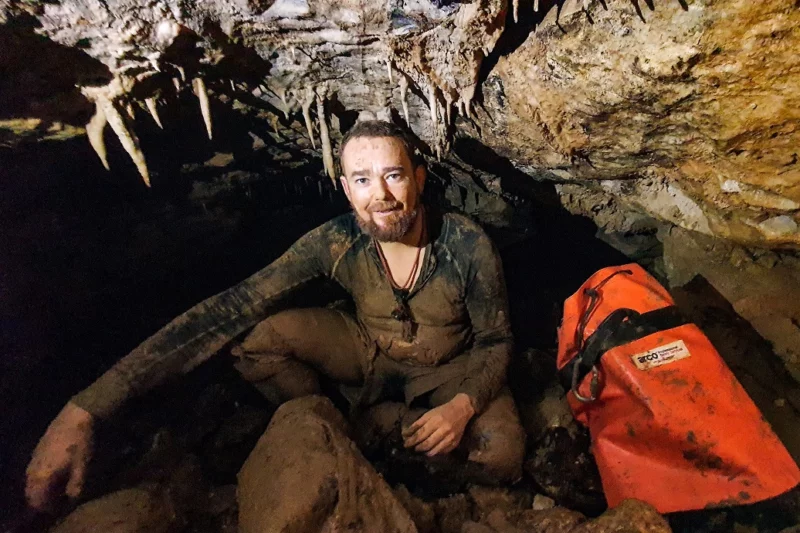
Bartek Biela, Training Instructor at Arco Professional Safety Services, commented: “I am immensely grateful to have received the invite call to be part of this amazing opportunity, that would give me a chance to meet and cave with the original explorers of the area, an opportunity that one does not refuse.
This expedition has delivered promising insight into the cave system and important, possibly even groundbreaking scientific research, not to mention the beauty of the underground landscape that I have had a chance to photograph”.
Richard Walters, the Expedition Surveyor said: “Acknowledging the challenging conditions of Mulu, renowned for its punishing environmental factors—extreme heat, humidity, mud, and frequent rainfall—these explorers faced the rigorous task of navigating caves that often require multiple days underground. Despite these barriers, the cavers emerged with compelling results that suggest the Clearwater Cave system may be the largest by volume in the world.”
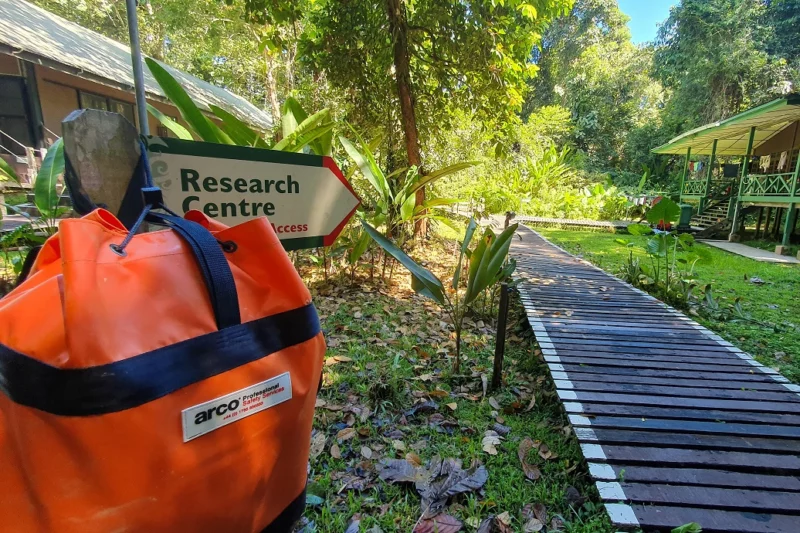
As part of Arco Professional Safety Services’ sponsorship, the expedition was equipped with eleven tackle bags which proved to be extremely durable in the corrosive environment of the Mulu caves.


Company News
Arco Professional Safety Services is now an accredited provider of Lifting Engineers Equipment Association (LEEA) working at height training courses. This makes the safety services company the first UK training course provider to be accredited for working at height & rescue by the LEEA.
The Lifting Equipment Engineers Association (LEEA) is established across the world as the leading trade association for all those involved in the lifting industry. Arco Professional Safety Services has been a trading member of this body since 2013 and offers a variety of working at height training courses that cover safe working practices and the correct usage of fall protection and fall arrest equipment. With working at height instances becoming more frequent in the lifting industry, the LEEA has collaborated with Arco Professional Safety Services to ensure those in the industry are trained in safe working methods.
The LEEA accredited working at height training courses that Arco Professional Safety Servies offers are:
- Working Safely at Height (one day)
- Rescue at Height (one day)
The Working Safely at Height course aims to educate delegates on the correct use of harnesses and fall protection equipment through both theoretical and practical training and assessments. The Rescue at Height course provides the knowledge and practical experience to perform rescues at height, examined through a simulated rescue under the supervision of an instructor.
Arco Professional Safety Services offers the two courses at all five of its Safety Centres located across the UK meaning all LEEA members can access the courses in a location convenient to them, with the reassurance that the training they receive will be of identical merit and content as their colleagues nationwide. In some cases, the training can also be completed at a customers’ site.
Steve Dawson, Training Manager at Arco Professional Safety Services, commented: “As working at height experts, we are always keen to expand and strengthen our safety training offering. Through discussions with the LEEA, we understood that working at height safety was a growing concern in the lifting industry that Arco Professional Safety Services was well placed to address.
No matter the industry, working at height safety should be a priority for all employers and this accreditation allows us to train and educate more people in the importance of correct working practices which we take pride in.”
To find out more about Arco’s working at height training offer, visit: https://www.arcoservices.co.uk/training/course-finder/working-at-height-training or to discuss booking one of the LEEA accredited courses, email rosie.webb@arcoservices.co.uk.
Company News
Arco Receives Accreditation to Begin Delivering GWO Courses
UK’s Leading Safety Company Receives Accreditation from Global Wind Organisation (GWO) to Deliver Training Courses for Onshore Wind Industry Workers.
Arco Professional Safety Services has been accredited by the Global Wind Organisation to deliver its suite of basic safety training (BST) qualifications at its safety centres in Linlithgow, Scotland, and Stafford, England.
The onshore wind turbine industry is growing sector within the UK energy market and generated around 24% of the country’s electricity in 2020 with Scotland championing the industry where wind alone generated 73% of all renewable electricity output.
The UK currently hosts an estimated 8,600 onshore wind turbines[1] with this capacity expected to double by 2030[2] in order to meet the target of having all of the UK’s energy generated from “clean sources” by 2035. Approximately 39,000 people in the UK undertook GWO courses in 2019 and with more turbines being built every year, the sector continues to grow while the workforce expands.
As a non-profit body founded by leading wind turbine manufacturers and operators, the GWO sets the international standard for training qualifications required by those working in the wind industries across the UK. The objective of the GWO is to support common industry training standards for health and safety that have been developed in cooperation between members of GWO and a variety of other stakeholders from the wind turbine industry.
Arco Professional Safety Services provides training and accreditation for the GWO BST Onshore course package, which includes the GWO Working at Height, GWO Manual Handling, GWO First Aid and GWO Fire Awareness modules. After completing the course, the qualifications are valid for two years before workers need to be recertified.
Steve Dawson, Manager – Working at Height Training at Arco Professional Safety Services, said: “As experts in safety, Arco Professional Safety Services is delighted to have received accreditation from the Global Wind Organisation and to be able to offer customers the full suite of onshore BST qualifications.
“In addition to our GWO BST Onshore training offer, Arco, as the UK’s only integrated services and safety products business, is also able to offer additional products and capabilities which other training providers can’t, such as fall protection equipment, rescue equipment, IRATA training (rope access), workwear, respiratory protection services and musculoskeletal disorder management, making Arco the expert safety partner of choice for those businesses and staff working in the wind industry.”
Spaces are available for these courses at Linlithgow Safety Centre, from Tuesday 16th to Friday 19th August, and Stafford Safety Centre, from Monday 12 to Thursday 15th September.
To book your place, visit: www.arcoservices.co.uk/training/course-finder/working-at-height-training/energy-and-renewables
Company News
Fall Protection Standards Updated – An Easy-to-Understand Guide to Ensuring Safety
Falls from height continue to be the largest cause of workplace fatalities in the UK. The latest figures show 29 workers were killed as a result of falling from height in 2021/22. Under the Working at Height regulations, it is the duty of those in control to do all that is possible to ensure the safety of those working at height. Fall protection solutions play a key role and we talk to Ben Haughton, Technical Director at Arco Professional Safety Services, about the latest standards and what building owners and managers need to be aware of.
Q. What are the key elements of a fall protection system?
A. High-level access solutions and anchor systems are designed to facilitate the safe and efficient working environment for roof maintenance and other tasks that are performed at high level or where there is exposure to a fall. A fall protection system incorporates several key elements, principally the anchorage whose design and application is influenced by a number of variables which depend on the risk and the situation and, as always, should only be necessary once all other methods of safe working from ground level have been considered.
Q. What processes are necessary when designing and installing a fall protection anchor system?
A. The designer must have a very good understanding of the requirements for working at height and the tasks that are required to be carried out when using the anchor system, they must also have a good knowledge of building fabric and engineering principles. Buildings range from the modern to the ancient and, where knowledge is limited, it is important that the designer has a network of supporting specialists from whom to seek advice.
Once a system has been designed and installed, it needs to be commissioned and certified. The installation and commissioning process for fall protection systems has largely been based on self-certification. The same goes for ongoing inspection and maintenance. In the past, a lot has been left to the interpretation of standards and as such there is always a risk of the system failing to protect workers properly and for badly maintained and faulty equipment to be in use. Without an appropriate design and inspection regime, the shortcomings of a system may only be realised when it is called upon to do its job, in the case of a fall arrest system, the outcome could be serious injury or death.
Q. Is there a standard that needs to be met to ensure ongoing safety?
A. BS 7883 has been in existence since 1997 and was revised in 2005, amended in 2007 and recently revised again in 2019. The BSI (British Standards Institute) PH5 committee, made up of expert representatives from across the industry, was set up to look at the existing standard and address some industry concerns. This most recent update takes into account the advances in fall protection systems and technology and provides a more prescriptive approach than the original versions, putting a greater emphasis on what must be done, as opposed to what should be done. The revised standard incorporates all commonly used types of anchor devices and provides prescriptive guidance on design, installation and inspection.
Q. Could you tell us more about the revised standard and what it means?
A. For the designer, specifier or installer of fall protection systems, there has always been a requirement to provide evidence of the design process. In the revised standard there is additional guidance on best practice to ensure all elements of a safe system have been considered and are documented. The designer must provide a system technical file that contains a minimum amount of information, and this file should be made available for reference at every inspection. This is particularly important as inspections are often carried out by third parties, who may have no prior knowledge of the original system design. The file could include photographs taken at the time of installation and other details that may not be immediately obvious on initial inspection, this is of particular importance where hidden elements comprise parts of the anchor system.
Q. Once a system is in place, what are the main requirements for maintaining safety?
A. Following initial installation, the anchor system must be inspected and tested at least annually (six-monthly where Lifting Operations and Lifting Equipment Regulations 1998(LOLER) applies) by a competent and qualified person to ensure it is in a safe working condition and carries the supporting formal certification. It is the duty holder’s responsibility to manage the anchor system and to ensure that it remains certified. If the certification does expire, or the system is failed at inspection, it is the duty holder’s responsibility to ensure that no one is allowed to use the system(s), in the case of a fail, this may require the anchor to be physically put out of service so that it cannot be used. The revised standard recognises that if it were applied to many existing anchor systems, most would simply fail if the outcomes were binary pass/fail, for instance the lack of supporting design information/technical file. So, in order to help with the transition from past to present, two other inspection outcomes are available: Conditional Pass & Conditional Fail.
o Conditional Pass – does not represent an immediate safety concern and the anchor system can be put into service provided a report is issued to the duty holder detailing the remedial actions required to bring the system into line with the current standard and a timeframe within which this should be completed.
o Conditional Fail – represents an immediate safety concern but one which can be remediated. The system must be immediately taken out of service (ideally physically preventing its use) and a report issued to the duty holder detailing the remedial actions required before a re-inspection is carried out and it can be returned to service.
Q. This standard isn’t regulation but what are the consequences of not adhering to it?
A. This is a standard and not a regulation and therefore there is no legal duty to comply with it. However, if an accident were to occur that involved the failure of a fall protection anchor system and the alternative design, installation and inspection process was found not to be suitable or sufficient, the designer, installer, duty holder or inspector could be found to be negligent in discharging their responsibilities under the Health & Safety at Work Act etc. and would most likely face prosecution under this and it’s aligned statutory instruments i.e. the Work At Height Regulations.
Q. Where can I go for further help and advice?
The design, installation and inspection of anchor systems is a complex matter and providing the right access solution may require a range of different anchor systems. The consequence of an anchor system failure could lead to serious injury or even death, so it is essential that developers, architects, constructors and duty holders seek the advice of service providers that are suitably qualified and have necessary experience of the design or installation that they are undertaking. Whilst not a legal requirement, commissioning of systems by a suitably qualified third-party provider can provide independent assurance that the anchor system has been designed and installed correctly.
Arco Professional Safety Services can provide expert assistance from initial concept design to installation, commissioning and periodic inspection. For further information: https://www.arcoservices.co.uk/services/fall-protection